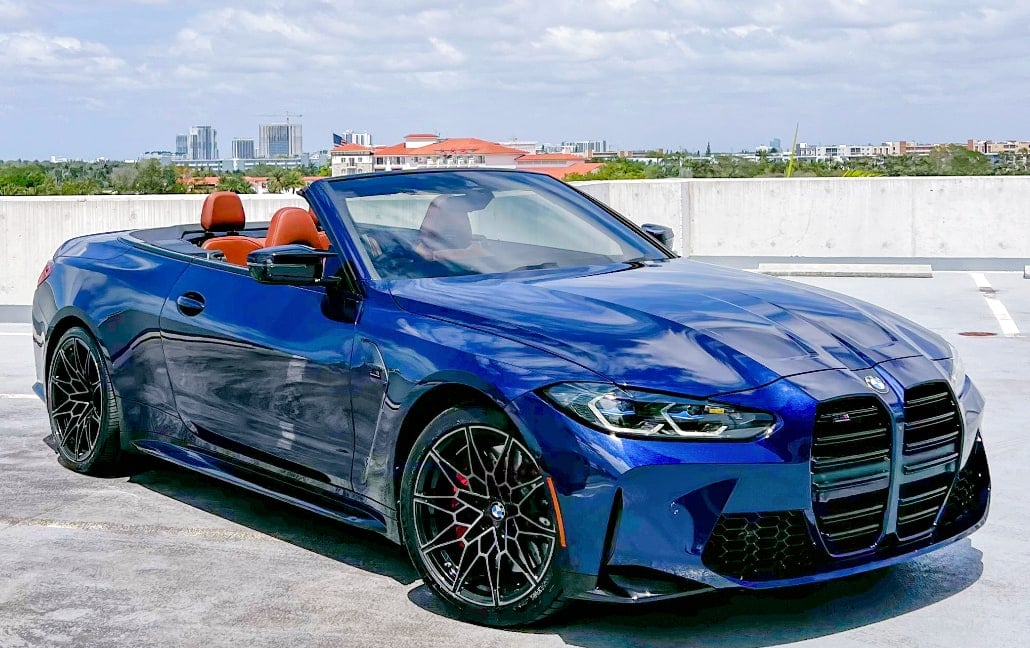
Run the luggage test first
Imagine the airport handover with every passenger and every bag present. For a convertible, ask about storage with the roof raised and lowered. Where a folding roof changes usable space, a bag that fits at arrival may need to be moved before an open-air drive.
For an SUV, ask how the luggage area changes with all required seats in use. A third row, if fitted, does not guarantee enough room behind it for the whole group's cases. Have the rental team assess your actual load rather than relying on a broad vehicle category.
Think about the people beyond the front seats
A convertible's rear seats vary greatly by model and generation. Check passenger information, photographs and access. Adults travelling together for several days may value room and convenient doors more than a brief open-roof experience.
An SUV can offer easier access for some passengers, but a higher step-in can be inconvenient for others. Ask about assistance needs early. Child seats, when relevant, require confirmed seating positions and an agreed installation arrangement; do not solve them for the first time at collection.
Decide how often you will lower the roof
Consider the time of day, heat, rain and where the car will be parked. A convertible still needs to work for your trip with its roof closed. Plan secure storage for bags and allow time to learn the roof controls during handover.
If your schedule mostly consists of meetings, airport luggage and parked days, an SUV or sedan may be the more useful base vehicle. If the open-air drive is the reason for the rental, choose a shorter period around that outing instead of forcing the same car to solve every need.
Compare cars within the right category
After choosing a body style, compare specific vehicles on the current catalogue. An SUV can be practical and distinctive; a convertible can prioritize touring or a more focused driving experience. Put the desired cabin arrangement ahead of assumptions about a badge.
Pugachev Miami's listings provide a starting point for model selection. Ask about the exact car, confirmed seating, luggage fit and dates. If neither category fits all parts of the trip, request separate quotes for different rental periods rather than assuming a vehicle swap is included.
Compare the tasks each body style must handle
Use the same passenger list, bags and parking address for every comparison. A convertible should pass the trip with its roof closed as well as open. An SUV should be assessed with all the seats you need occupied. A sedan deserves a place on the shortlist when comfortable daily travel matters more than a particular roof or silhouette.
Ask for a luggage check using the actual car, not a generic category photograph. Hard cases do not compress like soft bags, and a stroller can change the available space even when it is only one extra item. Describe the largest pieces and any equipment that must remain accessible while travelling. Avoid relying on an unused seat that another passenger needs.
The comparison below is a way to organize questions, not a specification sheet for every model. Door openings, roof mechanisms, luggage compartments and driver visibility differ between vehicles within the same category. Take the shortlist back to the exact listing and confirm the features your trip depends on before deciding.
| Body style | Strong reason to consider it | Check before choosing |
|---|---|---|
| Convertible | An open-roof outing is part of the experience | Luggage with roof open/closed; passenger access; secure storage |
| SUV | Passenger access and a mixed daily itinerary matter | Cargo with occupied seats; garage clearance; exact seating |
| Sedan | A comfortable base for airport, business and everyday trips | Rear-seat access; largest bags; actual parking dimensions |
Use two realistic itineraries to test the shortlist
For a two-person coastal weekend, list the airport bags separately from the bags needed for a single outing. Check whether the hotel can hold the larger items if your itinerary depends on that. A convertible can then be evaluated around the drive itself, weather alternatives and a confirmed place to park rather than around a photo alone.
For a family stay, include every occupied seat, each child's travel arrangements and the luggage needed on arrival and departure. Think through getting in and out at the hotel as well as driving between destinations. An SUV may make that pattern easier, but its category name does not establish that a particular car fits all the people and equipment.
If neither plan works with one vehicle, compare separate requests instead of assuming a free swap is included. An everyday car for most of the visit and a specialist car for an outing involve their own rental periods and handovers. Ask whether both are available, then compare the full arrangements and the extra coordination they require.